Counterfeit People
How comfortable are you with AI doubles replacing real workers in digital spaces?
At the Zurich Film Summit this month, a new starlet made her debut: Tilly Norwood, an AI-generated actress billed as “the next Scarlett Johansson.” She posed for photos, gave interviews and delivered lines without ever existing as a real person. The spectacle may have seemed like a novelty, but it captures a deeper shift already unfolding across our economy.
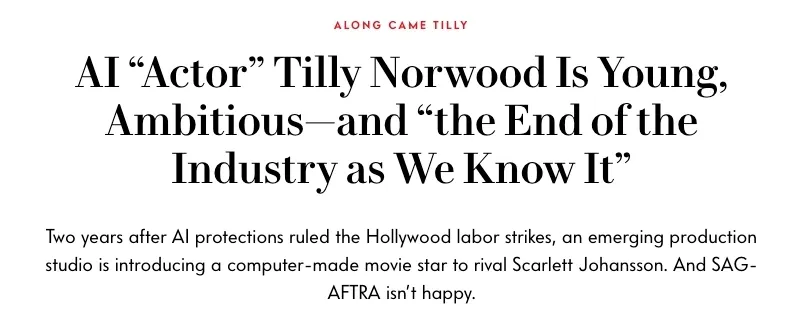
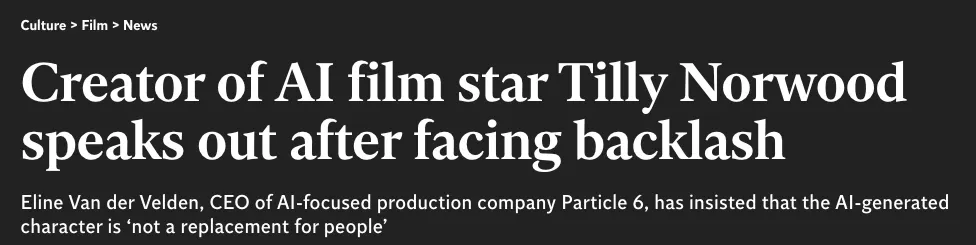
Canada has long worried about foreign takeovers of its industries, spurring protectionist policy responses and inspiring industrial strategies. But not all “invasion” threats are against territory or resources. Today, the creep of digital replicas has quietly begun to imperil our own individual sovereignties. AI avatars are no longer science fiction. Computer programs now allow anyone to create a convincing digital version of a human that can read text, deliver speeches, or mimic customer service scripts. The New York Times recently sounded the alarm on the spread of AI avatars, detailing a “new era of commercial work fueled by generative artificial intelligence.”
For businesses, the lure is obvious: avatars are far cheaper than employees. Why pay a call centre worker, a model, or even a mental health assistant when you can deploy a digital lookalike?
In the world of designer handbags, “dupes” — short for duplicates or knockoffs — have long been a way to save money, and their increasing popularity continues to fuel a micro-economy of its own in the fashion industry. But it’s one thing to proxy a popular shoe or a logo, and another thing to outright mimic a human being.
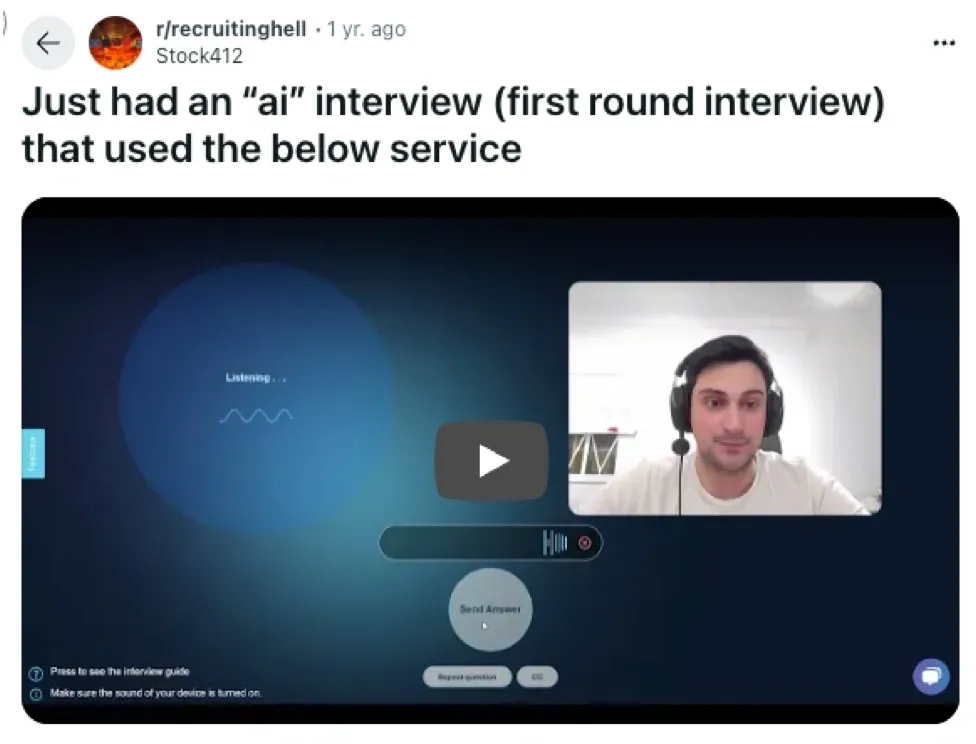
Some corporate uses of AI are subtle, like limiting new hires rather than directly replacing outgoing employees. However, in other contexts, human replacement is stark: a synthetic “someone” selling online 24/7, a deepfake politician, a computer-powered customer service agent, or an AI voice screening you for a job interview.
At the same time, some workers are leaning into the technology, licensing their own avatars or building side hustles around digital doubles. There’s now a thriving micro-economy of “fake” humans earning real money — like the Spanish AI model reportedly making up to €10,000 a month. The question is whether this represents a form of entrepreneurial empowerment, or just another way for markets to capture and commodify our likeness.
Replacing (or replicating) humans with AI avatars raises urgent policy questions. Where is the line between a licensed avatar and a counterfeit (or, more accurately, a sophisticated cartoon) human? Who owns the “likeness” of a worker: the employee, the employer, or the software provider? And what protections do Canadians have when we interact with a digital copy of someone rather than a real person?

Our regulators have not kept pace with generative AI, much less agentic AI (AI that can set specific goals with limited supervision). Right now, companies using chatbots to replace frontline workers in banks, telecom and airlines aren’t obliged to disclose that the “agent” is actually a cheerful program following a pre-programmed decision tree. As a result, consumers are left guessing whether they are dealing with a person or a machine. That opacity is creeping into hiring too, with avatars now auditioning applicants for jobs.
If left unchecked, “counterfeit” humans could accelerate worker displacement in various sectors: call centres, marketing, and even teaching and health care.
Meanwhile, companies are being formed around the concept of companionship chatbots
that supplement real-life friendships, thrusting us into a strange future where chitchatting with universally responsive algorithms could become the norm for many.
AI programs are even resurrecting the dead.
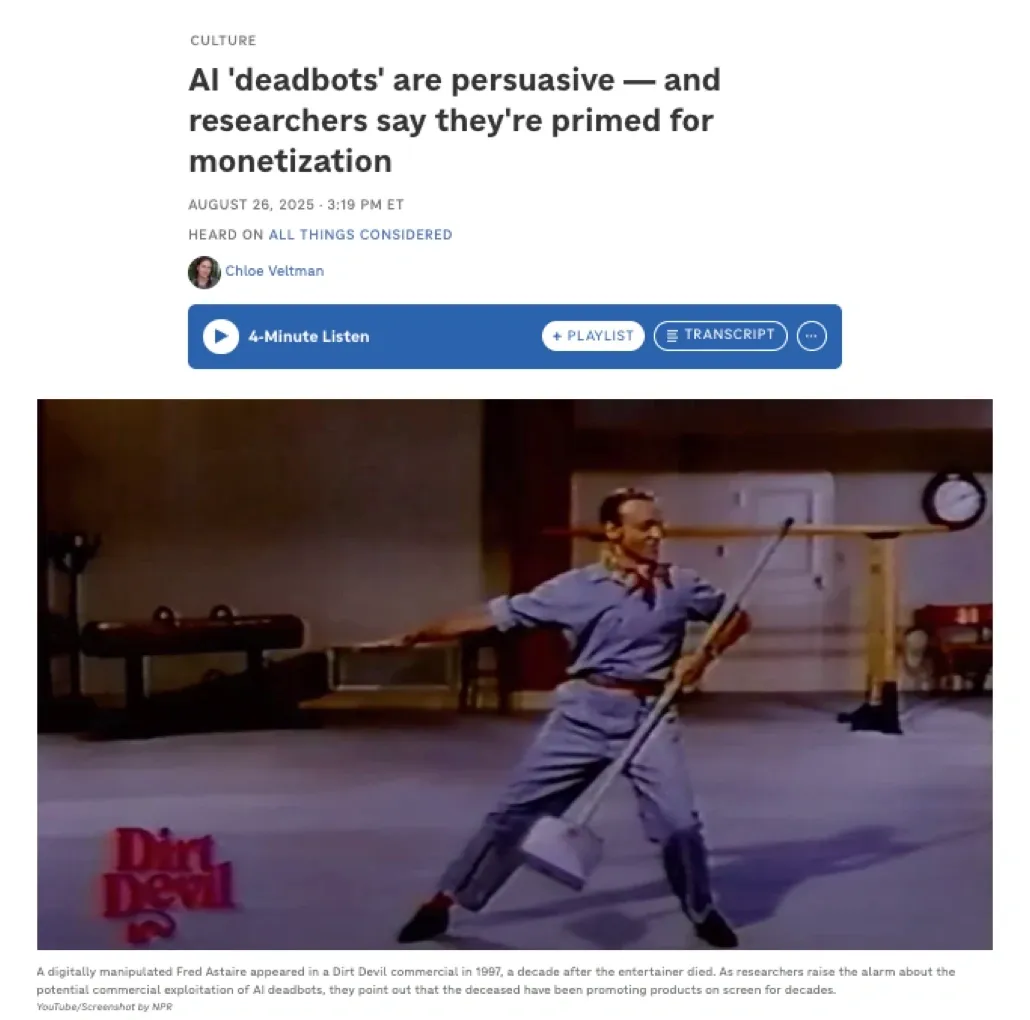
At its most harmful, the same technology enables deepfakes, which can be used to fabricate political clips designed to mislead voters and create sexualized replicas, usually of women.
Canada has no clear legal framework to prevent or punish these abuses yet, beyond narrow privacy or defamation claims that place the burden on victims to bring lawsuits. It is not clear whether a new version of the federal government’s previously proposed Online Harms Act will materialize in the current Parliament.
Elsewhere, regulatory progress is happening. The European Union’s AI Act instituted labelling rules for content that is artificially generated or manipulated. Denmark has proposed a bill that would offer broad copyright protections to digital identities, giving victims of deepfakes or AI copies some recourse. Illinois recently prohibited the use of AI chatbots in mental health therapy. Advocacy groups like Common Sense Media are calling for outright bans on companionship chatbots for minors, citing the emotional vulnerability of that demographic.
Canadian law has yet to draw similar red lines.
Should we also require mandatory labelling when a service includes an AI-mediated interaction? Should individuals have the right to licence and protect their own likeness from being cloned? And what guardrails are needed to ensure AI avatars don’t become vehicles for fraud, exploitation, or manipulation?
The Criminal Code of Canada criminalizes counterfeiting money and forging fake documents. The Trademarks Act protects registered trademarks from being copied or imitated. The Copyright Act protects original works. And under common law, victims can sue for the misappropriation of their personality, allowing public figures control over their likeness being used for commercial purposes without consent.
There is no clear boundary for “fake” humans.
The U.S. is attempting to reshore jobs that were lost during a massive period of globalization — but at least those jobs went somewhere else. When and how will we “reshore” roles that get handed off to AI in the near future?
Beyond job losses, this masquerade erodes trust in digital spaces. A future where Canadians cannot easily tell if they are talking to a person or a program is one where both democratic debate and consumer choice are undermined.
If pipelines and patents are national assets, so are our faces and voices. And in 2025, those assets don’t just sit in contracts or court filings, they sit on servers.
Tilly Norwood’s acting career makes what AI technology can do overt: scrape likenesses and voiceprints, use them as inputs to create digital performers, and distribute them back to us as entertainment, convenience or gatekeepers.
The sovereignty question isn’t just about jobs anymore. It runs on two tracks at once: who owns the human inputs, and who controls the machines that capture, train and monetize them.
How these policy issues are addressed will define the character of our digital economy.
Without deliberate rules, Canada risks outsourcing not just jobs, but trust.
These imitation humans are already becoming indistinguishable from the real thing. Our job is to quickly decide where the boundary should be between authentic human participation in digital economies and counterfeit digital imitation — before it is blurred entirely.
Song of the Week
Two icons of Canadian music came together for this one: Montreal’s Patrick Watson—known for his cinematic, otherworldly songwriting and losing his voice —and Martha Wainwright, part of the legendary Wainwright/McGarrigle family.
House on Fire is a haunting, fragile track that feels both intimate and expansive, a reminder of how Canadian artists so often punch above their weight in crafting music that resonates far beyond our borders.
This song came from a reader (thank you, Christo). Send us the Canadian music you’ve been listening to lately!

Canada and the EU Can Be Friends With Benefits
Ever since Prime Minister Mark Carney visited the European Parliament in September, we’ve been thinking about what a deeper alliance across the Atlantic Ocean could mean. As we hit send on this email, Carney is meeting with António Costa, President of the European Council, and Ursula von der Leyen, President of the European Commission, in Montreal. At the end of it all, we’re expecting an announcement of … something. There have been a lot of anonymous tips in news reporting, but at the Canadian Shield Institute, we prefer to read the formal communiqué rather than trying to interpret whispers. In the run-up to the summit, we’ve been doing a bit of research, and we published a few articles to set the stage.
EU Media Marketplace
The Europeans are trying to break the AdTech duopoly. Canadian companies have tried to work together to create an alternative to Google and Meta’s dominance. So far, Canada’s efforts have fallen flat. Will this new EU enterprise fare any better? Read our analysis here.
We find this whole situation very interesting for two reasons: First, Canada and Europe have a lot of the same problems right now. We’re all trying to figure out how to reduce vulnerability from the United States, and that vulnerability extends to digital reliance on private-sector technology platforms. It seems like we could benefit by joining forces, but it’s going to take some work figuring out exactly what that looks like in practice. Second, AdTech is just really interesting! Programmatic targeted advertising is the economic engine of the internet, and in turn this kind of advertising is hugely influential on culture and society. AdTech dictates what kinds of businesses thrive and what kinds of content gets posted online. Once you start researching it, AdTech quickly starts to look like one of the most important dimensions of digital sovereignty. If the online economy is entirely dominated by systems controlled by a handful of big American technology companies, realistically both Canada and the EU will always be on the back foot on digital governance.
Digital Services Trade
Speaking of being on the back foot, did you know that U.S. digital services exports to Canada are worth more than all the autos, steel, aluminum, lumber, potash and electricity put together? Why aren’t we talking about digital trade policy more in the negotiations with the United States? Read our analysis here.
And the European Union is in a similar position. The EU has done a lot more to assert digital governance, but their trade deficit on digital services just keeps going up. This is a kind of reliance that creates a meaningful vulnerability if the United States keeps playing hardball. Read our analysis about EU digital trade here.
Digital services might be a promising area for Canada and the European Union to work together. When the final communiqué is delivered from the Canada-EU summit, we will be combing through it for specific mentions of digital trade collaboration.
Digital Sovereignty Policy
Despite the EU’s digital dependence, we see a lot to admire in how the Europeans have been trying to assert their digital sovereignty. To be blunt: They’re trying things! Canada has often been slow to pass meaningful digital regulation, and quick to walk back policies that offend the Americans. The EU has enacted some really interesting regulations. Could Canada use “digital trade alignment” as cover to follow the EU’s lead? Read our analysis here.
The Bottom Line
Overall, when it comes to digital governance, we have a lot of hard work ahead of us. Digital policy is complicated and opaque, and it’s not enough to just pass a good law. Ongoing enforcement is a real challenge too. But this is one of the most pressing policy issues of our time, and with the accelerating deployment of AI systems, this issue is only going to become more urgent. It’s not as easy as striking a deal to sell soybeans, but digital governance is an area where Canada and the EU are natural partners, and it’s something we should be working on.

Subscribe to