What Is Variable Geometry
Prime Minister Carney first used the phrase “variable geometry” in public at the Council of Foreign Relations in New York on September 22, 2025.
“Our response to [the geopolitical rupture] is to build strength at home, to build resilience by diversifying abroad, and pursue a variable geography, to defend our values and pursue our interests.”
A few lines later, while talking about the G7, he called it a “variable geometry support point.”
“Variable geometry” is one of those phrases that sounds really smart, but then if you think about it for a minute, you’re not actually totally sure what it means. What’s clear is that Prime Minister Carney loves to say “variable geometry.”
He used the phrase in his landmark speech about middle powers at the World Economic Forum in Davos. He said it again a couple days later at a speech in Quebec.
He brought variable geometry down under when he addressed the Australian parliament in March.
In an interview with The Economist in October of 2025, Carney talked about a “degree of variable geometry of trade.”
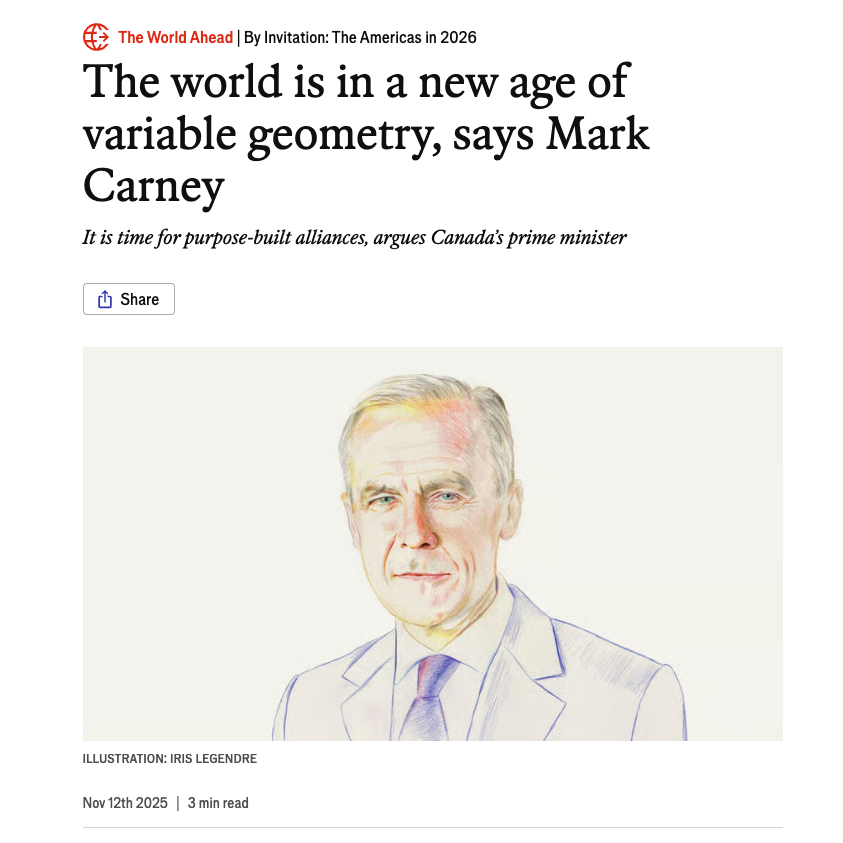
But it was the much-discussed Davos speech in January of this year where Carney defined the idea of variable geometry most plainly: “To help solve global problems, we are pursuing variable geometry. In other words, different coalitions for different issues, based on common values and interests.”
He went on: “This is not naive multilateralism. Nor is it relying on their institutions. It is building the coalitions that work, issue by issue, with partners who share enough common ground to act together. In some cases, this will be the vast majority of nations.”
This makes a lot of sense in a volatile world. But it’s also pretty vibes-y.
It’s awfully hard to assess the Carney strategy when the geometry might change next month. But it’s certainly an elegant turn of phrase, for a moment when the world feels less stable than ever before.
So when you hear the phrase “variable geometry,” it’s not referring to a calculus textbook (that’s a variable in geometry).
It means, rather than assuming old multilateral institutions or the U.S.-centered order can handle everything:
- flexible, purpose-built alliances;
- Canada working with different sets of partners on Ukraine, Arctic security, trade, critical minerals, AI and more.
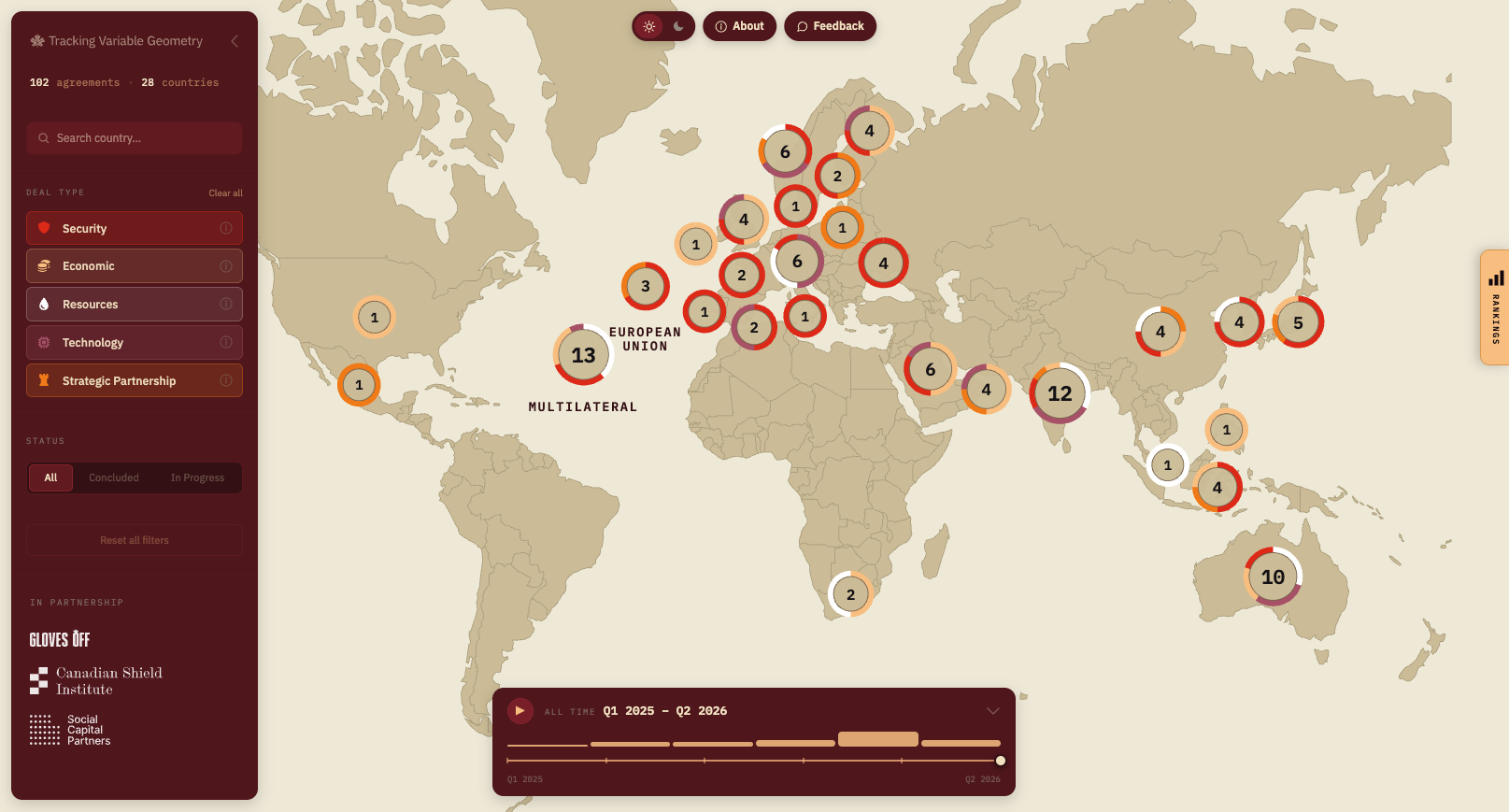
So how’s this strategy going? Well, for that, you can check out the Variable Geometry map that the Canadian Shield Institute pulled together, in partnership with our friends at Gloves Off and Social Capital Partners.
Here’s the map of our new geopolitical strategy: VariableGeometry.ca

Subscribe to