The Trade Barriers No One Talks About
Who is really setting Canada’s trade rules — Ottawa, or Apple, Amazon and Google?
In last week’s newsletter, Shield wrote about how the federal Budget appeared to forget about the internet.
The omission matters because the internet is also the infrastructure of modern trade. Canada’s exporters increasingly sell software, services and digital goods, but our trade agenda still treats these digital channels as afterthoughts rather than an arena of economic policy.
Canada’s ongoing work to eliminate interprovincial trade barriers is a federalist feat. With ambitious timelines and earnest communiqués, a familiar promise has taken shape: fewer frictions and more productivity. But there are bigger barriers choking Canadian commerce than provincial borders; they are the private chokepoints that are embedded in the digital rails of modern business.
E-commerce rules are set by large players and imposed on everyone else, creating frictions that shape profitability and access to markets in a similar manner to tariffs. And no one is talking about them.
Digitally delivered services are Canada’s fastest-growing trade opportunity, expanding far faster than goods and already accounting for nearly two-thirds of commercial services exports. Yet Ottawa still seems to frame trade primarily through tariff rates, disregarding the API era. We’re leaving growth on the table.
The largest U.S. technology firms can gatekeep marketplaces as private regulators. Amazon controls ~41% of Canadian e-commerce — functionally a private border crossing for online retail. To reach customers on Amazon, Canadian sellers face stacked fees (for referrals, pay-to-play visibility, fulfillment, ads) that leach about 0.45 cents of every seller dollar. That’s a toll road.
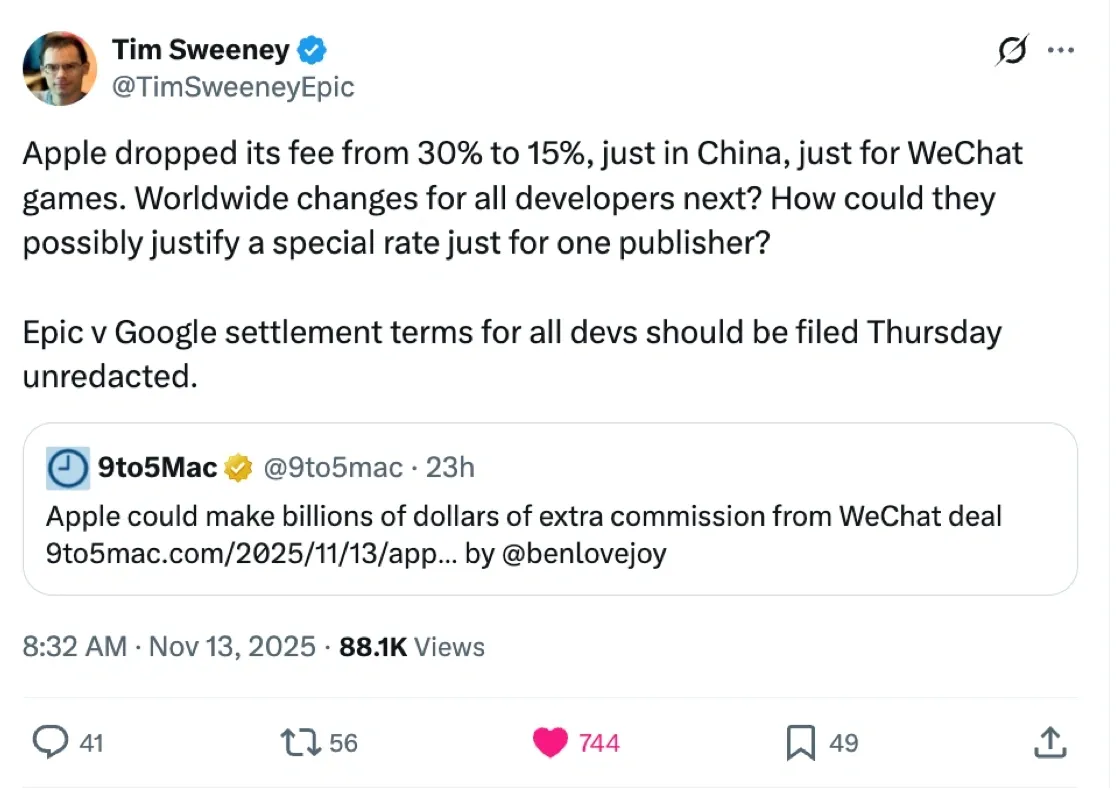
Amazon also penalizes sellers for how they set prices, a policy the Competition Bureau is probing, while Meta maintains the ability to arbitrarily cut off small businesses from audiences. Over at Apple’s App Store, entrepreneurs have long been paying a 30% tax on downloads and in-app sales.
Further, Silicon Valley’s ad tech stack is rent-seeking. The companies that dominate online advertising (Google, Meta, Amazon, etc.) extract money from the system without creating equivalent value — essentially charging tolls because they can, not because they’re adding meaningful value. The Competition Bureau is actively suing Google for allegedly using its dominant search engine position to inflate online advertising prices and manipulate the ad auction marketplace to the detriment of Canadian advertisers and publishers.
So if you’re a small or medium Canadian enterprise buying reach through online ads, you’re essentially paying a stack tax. Antitrust titan and academic Tim Wu has advised that “Canada needs to think of Big Tech’s monopoly extraction powers as akin to a private tax on Canadian business. Given that the platforms are essential to commerce, they are not unlike toll bridges being operated by a foreign company.”
Unfortunately, Canada has hamstrung its regulatory authority by signing onto CUSMA’s digital chapter, which bans our government from requiring tech firms to localize their data on Canadian soil, or disclose details about their algorithms or code. A provision ensuring the “non-discriminatory” treatment of American tech products further narrows our room to protect domestic firms and data sovereignty.
These restrictions are discussed in a 2023 Rethink Trade report that exposes how Big Tech is using “digital trade” provisions in trade deals to pre-empt domestic regulation of privacy, AI accountability and competition. By locking in rules that prohibit governments from auditing algorithms, restricting data flows or treating large platforms differently, trade pacts like CUSMA tie regulators’ hands even as legislators push for tougher tech governance. The report warns these back-door fixes could undermine efforts by countries to rein in platform power and protect consumers.
The U.S. Foreign Intelligence Surveillance Act (FISA) opens the door to U.S. surveillance of Canadian firm-level information, including sensitive information related to intellectual property, as scholar Andrew Clement has suggested. Canadian data then risks being used for competitive intelligence gathering or even for LLM training. Such surveillance activities could be justified under various pretexts by U.S. authorities, but would ultimately further cement the dominance of American tech firms. The full breadth of risks to Canada’s digital sovereignty from U.S. surveillance was not recognized by the Government of Canada in a recent update to its digital sovereignty framework.
Small and medium-sized enterprises (SMEs) make up 98% of all Canadian firms. A “One Canadian Economy” approach must wrap in the economy that runs through app stores and digital marketplaces.
So why don’t we hear more about these hurdles from the businesses that face them?
The American Economic Liberties Project found many small online sellers and independent businesses are reluctant to publicly criticize dominant digital platforms like Amazon, Google or Apple because they fear retaliation, such as being delisted, demoted in search results or losing access to their customers. This “chilling effect” means even well-established firms self-censor rather than risk their livelihoods.
In Canada, similar concerns were captured by the Canadian Federation of Independent Business, which reported that 55% of small businesses selling on Amazon were dissatisfied with the platform’s rising fees, poor transparency and lack of recourse when problems occur. These findings underscore how concentrated digital marketplaces leave sellers feeling trapped and powerless.
But structural remedies are being tried elsewhere. The EU is forcing reforms on the App Store and has already produced fines for non-compliance. In the U.S., Epic Games and the Coalition for App Fairness are also challenging Apple’s gatekeeping fees.
But Canadian firms — especially SMEs — don’t seem to have the legal firepower or collective leverage to take on these cases.
The federal government has an opportunity to champion small businesses by confronting the structural barriers they face in today’s digital marketplaces. One option is to update competition tools to recognize gatekeepers, starting with a market study on platform conduct that affects SMEs’ access to markets.
Canada could also consider a “designated gatekeeper” regime (as of September 2023, the European Commission designated six major technology companies as gatekeepers: Alphabet, Amazon, Apple, ByteDance, Meta and Microsoft) tailored to Canadian markets that imposes interoperability obligations and non-discrimination rules for ranking. This would force the platform to play fair — allowing others to plug in and treating all services neutrally in rankings, instead of allowing it to quietly boost its own stuff. And through the upcoming CUSMA review, Canada (and its partners) could clarify that applying competition-enforcement measures to a dominant digital gatekeeper — so long as those measures are transparent, non-discriminatory and objectively justified — would not constitute a “disguised restriction on trade.” In trade-law terms, a disguised restriction is a measure that appears neutral or legitimate but is structured in a way that quietly limits trade or discriminates against foreign competitors.
As a starting point, Canada needs to understand the magnitude of the harms being experienced by Canadian SMEs. The Competition Bureau can collaborate with other regulators like the Privacy Commissioner, CRTC and Copyright Board of Canada on research and market analyses by exchanging information through the Canadian Digital Regulators Forum.
It’s shortsighted and irresponsible for Canada to obsess over interprovincial trade barriers while ignoring the tolls, throttles and terms that govern digital exchange. And this blindspot is mighty convenient for large firms like Amazon that can continue to exploit sellers. As we seek to reclaim and reassert digital sovereignty, we should extend the “One Economy” project to the systems that route demand for much of e-commerce: digital marketplaces, app stores and ad stacks. That’s how you turn sovereignty into SME surplus.
Until next time,
Vass Bednar
Read More
The Canadian Anti-Monopoly Project’s new paper “Confronting Canada’s Gatekeeper Crisis” warns that Canada’s dependence on U.S. tech giants has evolved from a competition issue into a sovereignty threat. As the second Trump administration embraces protectionism and Big Tech cozies up to Washington, the infrastructure Canadians rely on — digital advertising, cloud computing and artificial intelligence — is increasingly controlled by foreign monopolies. Google, Meta and Amazon command nearly 90% of Canada’s $16.5-billion ad market; Microsoft and Amazon dominate federal cloud contracts; and U.S. and allied firms like NVIDIA and Google hold the keys to the AI supply chain. The paper argues that these dependencies leave Canada vulnerable to economic coercion and political manipulation, and calls for a national strategy to map digital dependencies, confront monopoly power, and rebuild digital sovereignty through public investment and allied collaboration.
Amazon’s Monopoly Toolbooth analysis from the U.S.-based Institute for Local Self-Reliance report reveals how Amazon has transformed its e-commerce marketplace into a “tollbooth” that extracts enormous fees from the third-party sellers who depend on it, taking about 45% of sellers’ U.S. revenue as of the first half of 2023 (up from 19% in 2014). Sellers are required not only to pay referral commissions, but increasingly to buy Amazon’s own “advertising” placements (which influence how search results surface) and to route fulfilment through Amazon’s warehousing and shipping systems if they want to qualify for Prime. Because Amazon also penalizes sellers who price below Amazon’s price or try to divert volume to other channels, the mega retailer is trapping businesses into dependence and cutting off competitive alternatives. Meanwhile, Amazon uses the revenue from extracting these fees to subsidize its own retail operations and infrastructure, enabling below-cost pricing of its own goods and reinforcing its dominance.
In the Sovereignty Conversation This Week
Shield was delighted to join CBC in celebrating 60 years of IDEAS — a landmark anniversary for one of Canada’s most vital spaces for public thought. Our conversation from the event will air as part of an upcoming episode, contributing to the next chapter of rigorous, long-form inquiry the program is known for.
Shield was also in Ottawa this week for the Canadian Internet Governance Forum 2025, which we were proud to host, while also joining the panel on “Digital Sovereignty: The Government of Canada’s Digital Agenda.” The conversation brought together leaders from government, academia and industry to examine how Canada can strengthen its digital autonomy — from infrastructure and data governance to platform accountability and the strategic capacity needed to shape our digital future.
Shield In the News
From autonomous vehicles to automated science, these two media moments examine the growing governance challenges of AI-driven systems.
In the novel Culpability by Bruce Holsinger, the Cassidy-Shaw family’s autonomous minivan collides with another car, killing the elderly couple inside — and triggers a deep dive into who or what is really to blame: 17-year-old Charlie behind the wheel, his distracted father Noah working on his laptop, mother Lorelei the AI-ethics scholar in the back, or the algorithm driving the vehicle. The narrative weaves suspense and moral complexity with incisive reflections on agency, technology and responsibility in an age of opaque systems.
This conversation on CBC Books’ The Next Chapter featured Vass Bednar (Managing Director of Shield) and explored how the book opens pressing questions around AI governance: Who is accountable when machine decisions lead to harm? And how do we govern systems whose logic we can’t fully see? The discussion put this fictional scenario in stark relief against the real-world rush of autonomous systems and the urgent need for clear norms, transparency and oversight.
A new episode of Policy Prompt — “Scientists and AI: Partners in Discovery” from the Centre for International Governance Innovation — features hosts Vass Bednar and CIGI President Paul Samson in conversation with Rebecca Willett, a University of Chicago professor. Together, they explore how machine-learning and AI are transforming scientific research, from generating hypotheses to designing experiments, and ask a provocative question: can AI truly discover?
Join us at these Upcoming Events
Friday, November 21st – We are interviewing Cory Doctorow about his new book Enshittifcation: Why Everything Suddenly Got Worse and What to Do About It, in partnership with BC Libraries and the Vancouver Public Library. Doctorow continues his excellent campaign against platform decay and monopoly logic. This event is online and you can register here.
Tuesday, November 25th – We are interviewing Darrell Bricker and John Ibbitson about their new book, Breaking Point: The New Big Shifts Putting Canada at Risk where they explore how economic, technological and geopolitical pressures are reshaping Canada’s future. This event is free to attend and will be hosted on the CIGI campus. Grab your ticket here.
Friday, December 5th – We are kicking off the Toronto Public Library’s AI Summit with a discussion on Building the AI Future We Want To Live In. We will interview Mutale Nkonde, the founder of AI for the People. This event is free to attend and requires registration.
Song of the Week
Fine Food Market is the folk dream-pop project of Montréal-based multidisciplinary artist Sophie Perras. Drawing from her training as a classical pianist and inspired by the sound of her beloved PSR3000 keyboard, the songs of Fine Food Market are intuitive, emotional and fun.

Subscribe to