Manitoba's Algorithmic Pricing Experiment
One of the basic ideas about Canadian sovereignty that we spend a lot of time talking about at Shield is this: Can we actually govern what’s happening in our country?
In Manitoba, the NDP government led by Wab Kinew is introducing legislation that would ban “business practices related to the use of algorithms or automated processing and large-scale data collection to increase the price of a consumer good for a specific consumer.”
In theory, when the bill becomes law, personalized algorithmic pricing will be deemed an unfair business practice — both online and in retail stores.
On its face, this is an important step forward in consumer protection regulation, but we think there might be a Canadian sovereignty issue here too.
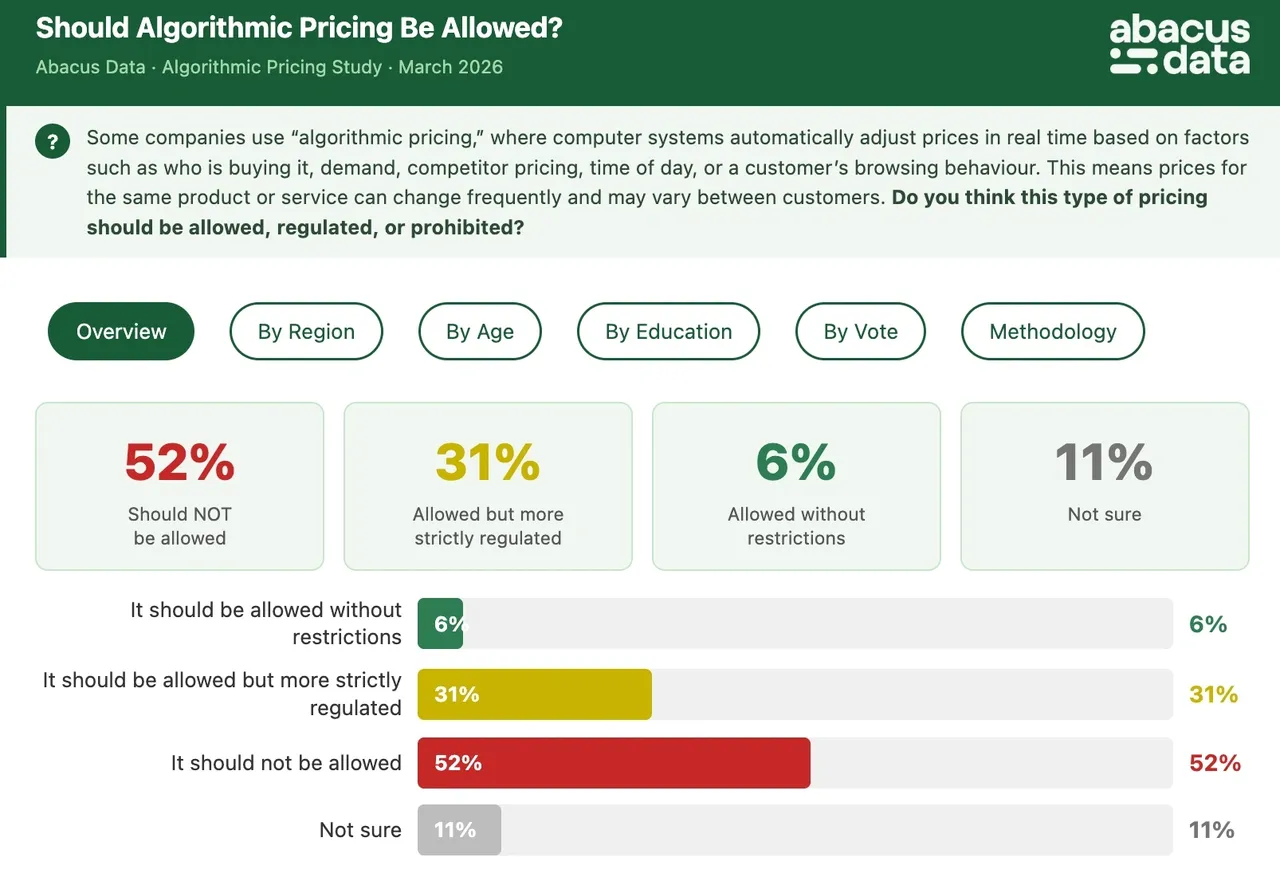
We know that addressing algorithmic personal pricing is politically popular. A recent poll by Abacus Data found that 52 per cent of Canadians want personalized pricing to be banned.
But here’s the question: Do we believe that Amazon and Uber and AirBnB will institute stable, standardized prices for customers in Manitoba?
It seems like in various boardrooms (or, let’s be honest, on various Microsoft Teams calls) lawyers and executives will be talking about their options.
Maybe they’ll decide to comply with the law.
Or maybe they’ll just ignore the law and keep finely calibrating pricing, wait for the government to bring a case, and fight the law in court.
Or maybe they’ll decide that Manitoba is too small a market, and they don’t like the precedent, so they’ll just withdraw services entirely. We have seen Uber threaten this before. It’s also basically the strategy Meta has taken by blocking news in Canada, because the company doesn’t like the Online News Act passed by the federal government.
This is a sovereignty issue.
It’s not exclusively foreign companies playing in the predatory pricing game. But it’s a problem if Canadian governments can’t pass enforceable laws governing commercial activity taking palce in our country. And when it comes to the digital realm, we can’t be sure that foreign companies will always comply with our laws.
We’ll be closely watching where things go from here in Manitoba. It matters whether a democratically elected government can exert sovereign power to enact policies that are broadly supported by the population, or if the power of (mostly) foreign corporations can effectively resist regulation and accountability.
Manitoba isn’t the only place that’s looking at curtailing algorithmic pricing — it’s just the first mover in Canada. California, New York (twice!), and Connecticut have all passed related bills, and several other states are considering their own.
These measures range from outright bans on personalized pricing, to limits on what data firms can use, to disclosure rules for companies that tailor prices using consumer data. Many of these bills also carve out exceptions for financial institutions or voluntary subscription, loyalty, and rewards programs.
These new rules are popular because people really don’t like predatory pricing, but they are also tugging on a deeper issue: Setting the terms for how data is used in commerce.
Canadian Shield Institute board member Jim Balsillie wrote about this in the Globe and Mail in February; that algorithmic pricing is just the most infuriating and visible example of companies using vast amounts of our data against us.
When you think about the consumer protection policies, you’re focusing on regulating the downstream outcomes. This is “ex post”-style regulation that occurs after the event.
When you think about the issue in terms of data collection and usage, you’re focusing on the upstream issues of privacy and citizen rights — that’s a more powerful way to grapple with these issues. That’s “ex ante” regulation, and it happens earlier. It’s much more powerful.
But when you think about the issue of whether Canadian governments are able to set rules for foreign companies at all — that’s a sovereignty question. And if we don’t have a strategy for addressing that issue, the rest of it is largely meaningless.
In the News
BNN BLOOMBERG – Shield Chief Economist Kaylie Tiessen was on BNN Bloomberg talking about the rates of intellectual property ownership by Canadian businesses. Watch the segment here.
THE WALRUS – In The Walrus, Shield Managing Director Vass Bendar talked to editor-in-chief Carmine Starnino about Manitoba’s algorithmic pricing ban. Read that Q&A here.
SHIELD ABOUT TOWN — Vass was at the CIX Summit in Toronto, on stage with ThinkOn CEO Craig McLellan, Sentinel R&D CEO Kath Intson, and Heling Pu, COO of Quantum Bridge Technologies to talk about Redefining Sovereignty. Betakit wrote about it here.
ON THE RADIO — Shield Policy Research Associate Emily Osborne was on the Brian Crombie Show talking about digital sovereignty. Listen here!
EXPLOSIVE BLOG — This week Prime Minister Mark Carney announced that Canada hit 2% of GDP dedicated to defence spending. Shield Senior Policy Research Matthew da Mota points out that a big chunk of the money we’re spending on ammunition is going to American defence contractors. Read it here.
Chart of the Week
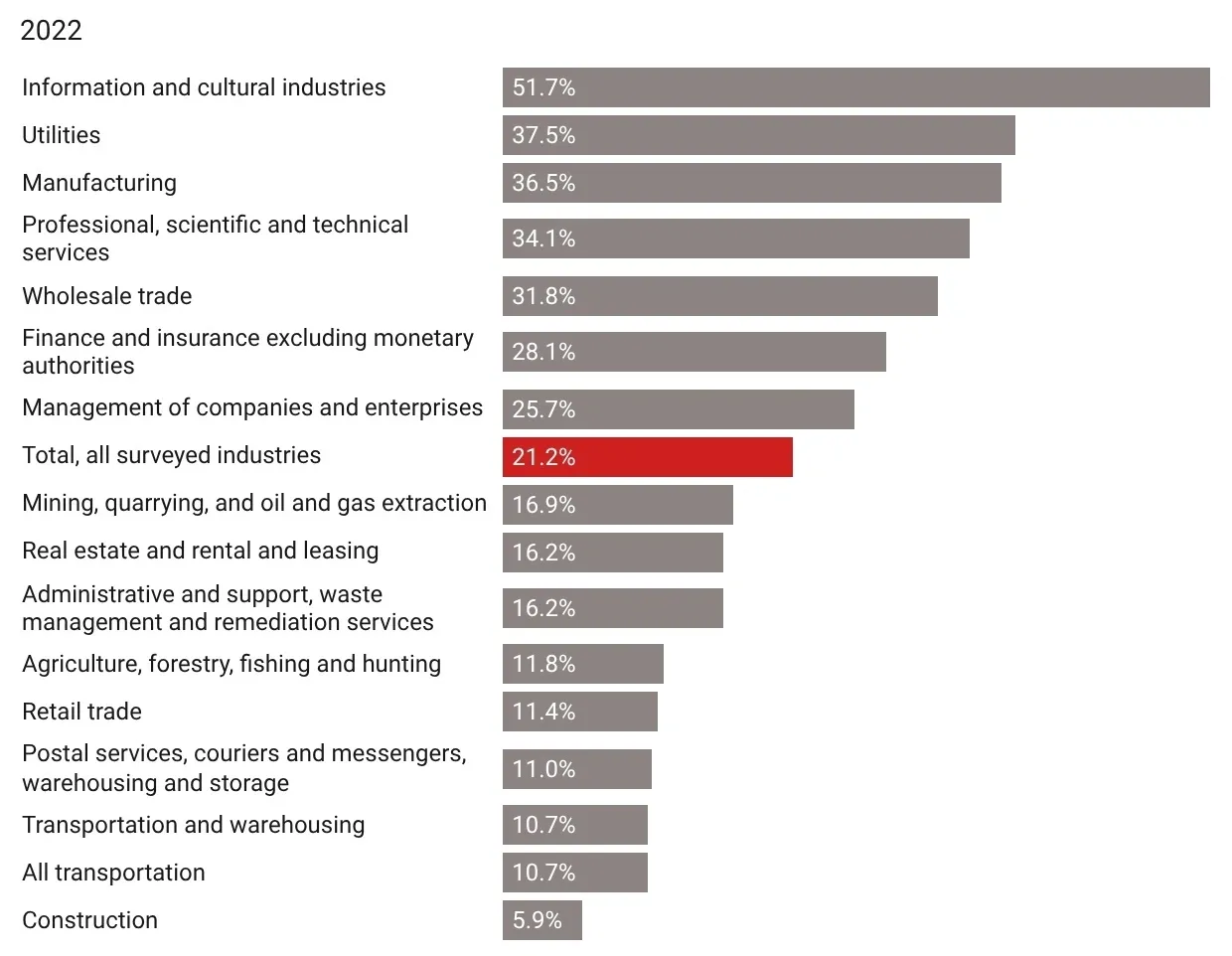
Last week, Shield Chief Economist Kaylie Tiessen highlighted how 21% of businesses in Canada own intellectual property. This week’s chart shows how that ownership varies widely across industries.
These numbers come directly from Statistics Canada’s Survey of Innovation and Business Strategy covering businesses with at least 20 employees and at least $250,000 in revenue.
Some sectors are heavy IP owners. For example, more than half of businesses operating in information and cultural industries in Canada own IP. In the manufacturing sector the share is 36.5% and in wholesale trade it’s just about one-third.
At the other end of the spectrum, just 6% of businesses in the construction industry and about 11% of businesses in transportation, warehousing and logistics (including postal services, messengers and storage) own IP.
IP ownership varies across industries because some industries develop ideas that are more obviously protectable such as media content (in the case of information and cultural industries) and software. While other industries may predict less benefit from protecting operational excellence or route enhancements.
It’s difficult to say if this is a problem or not, but if we want to increase the number of companies that own IP in Canada we need to better understand the picture.
The Share of Businesses in Canada that Own IP by Industry
Turns out, truck drivers don’t generate much IP, but TV shows and movies do:
Source: The Canadian Shield Institute, Statistics Canada, chart created with datawrapper
Hit Play
How about some weird Quebecois jazz?
Let’s listen to some weird Quebecois jazz.
Shield Managing Director Vass Bednar argued vociferously to include Angine de Poitrine in the newsletter this week. (Shield’s Editorial Director wanted to go with a nice folk song.)
Check it out. It’s weird. Weird is good.

Subscribe to