How to Think About Canada's 5% Defence Commitment
How Canada Wins at Defence
We’re working with the Gloves Off podcast to provide policy research on the topics and questions that drive Canadian sovereignty. This week, host Stephen Marche is talking about how Canada can bolster our military, and defend our sovereignty.
Canada finally hit our goal of spending 2 per cent of GDP on defence this year. By 2035, the government says we’ll go to 5 per cent.
This is the result of the NATO defence investment pledge that NATO countries have committed to.
The question we need to be asking is: What will we get out of this enormous surge in spending?
By 2035 we are talking about spending $230 billion on defence and security, based on the Parliamentary Budget Officer’s analysis.
To put it into context, the Canadian Shield Institute ran the numbers on how much we could buy with $230 billion, based on current military expenses. It’s … a lot.
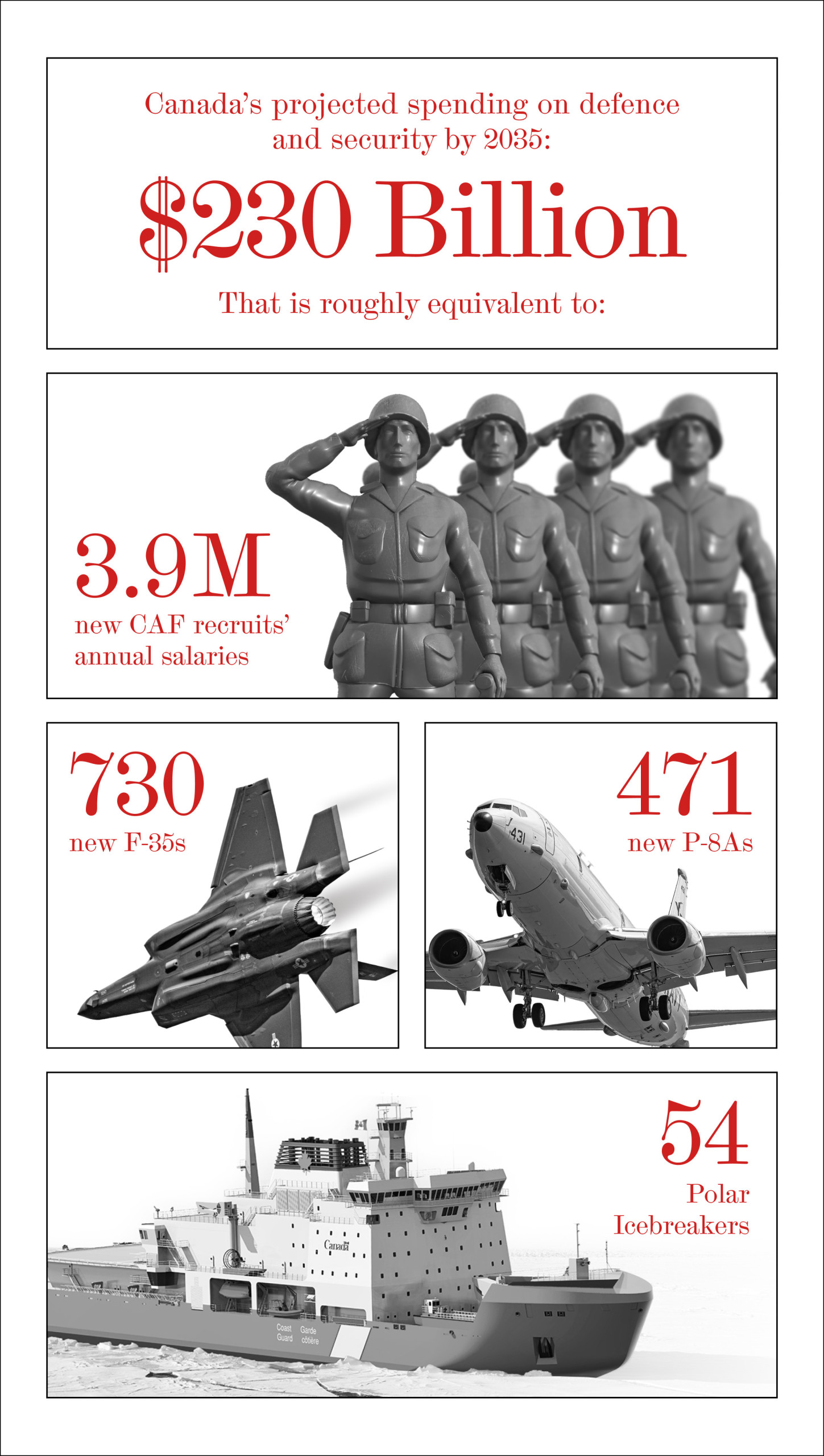
Of course, it would be absurd for Canada to buy 730 F35s, or recruit 3.9 million new soldiers. (That’s more than the population of Nova Scotia, Manitoba and Saskatchewan, combined!)
But it does point to an important nuance in Canada’s defence spending commitments. Strictly speaking, we have actually committed to 3.5 per cent of GDP being spent on defence directly, plus another 1.5 per cent for broader defence and security related investments.
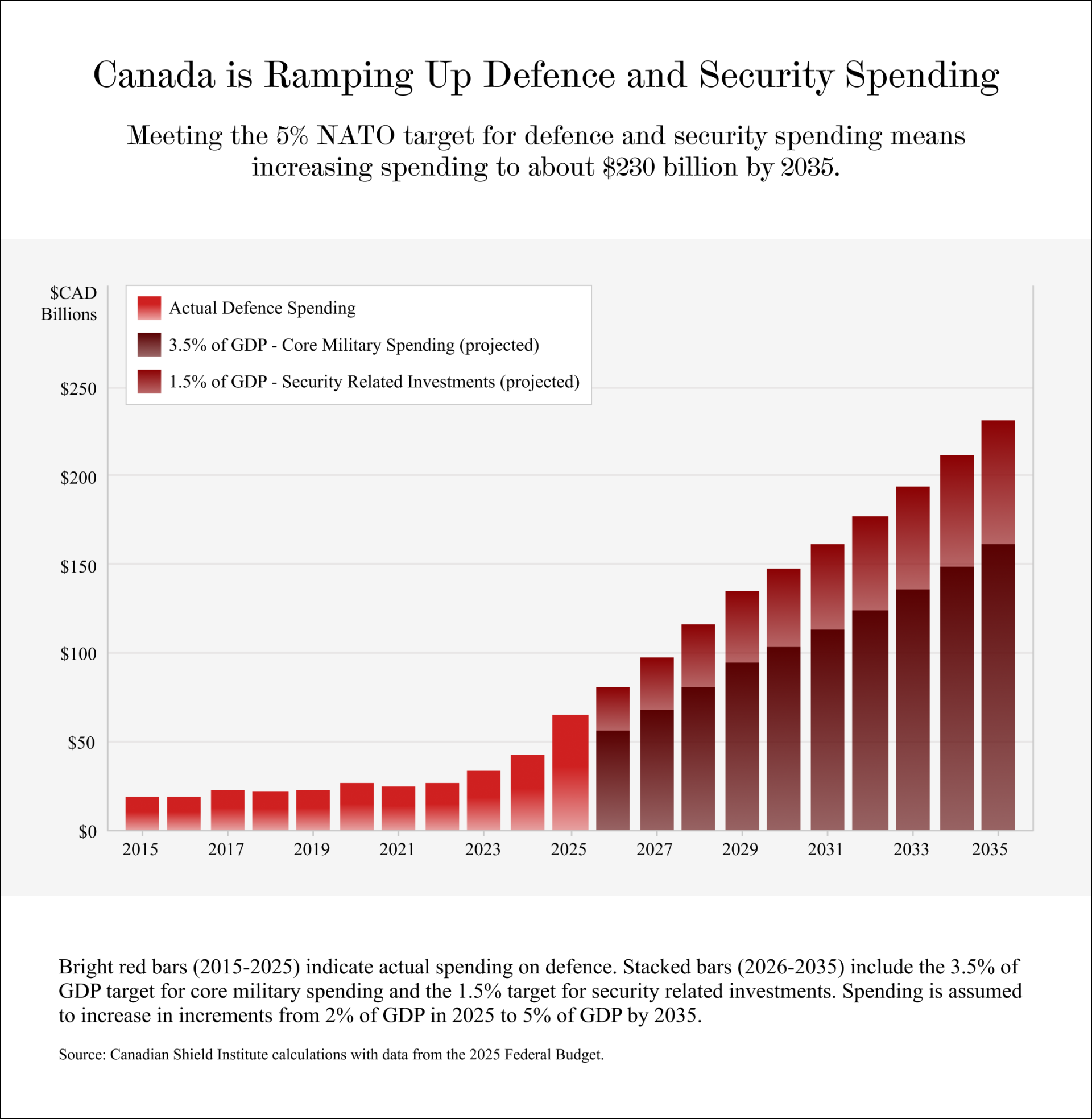
It’s not yet clear exactly what expenditures Canada will include in the security related component.
Will port upgrades to secure non-U.S. export routes be categorized as security-related spending? Will we lump in dual-use infrastructure like new highways to the Arctic, or new digital connectivity that has both military and civilian uses?
The government is counting on defence spending driving real economic growth for Canada and has committed to procuring more from Canadian defence companies, but it’s worth noting that only 18 per cent of initial spending announced through the Defence Industrial Strategy went to Canadian firms.
For a deeper dive into this thinking, the Canadian Shield Institute’s Matthew da Mota has written about Canada’s history of dual-use technology investments, and in particular the opportunity for Canada to leverage real advantages in quantum computing for both defence and commercial applications — that would be one great place to put some of our security dollars.
Subscribe to