Algorithmic Vassal State
As we send this, U.S. President Donald Trump and Chinese President Xi Jinping are on the phone in a conversation that could determine the future of TikTok in America. But what about Canada?
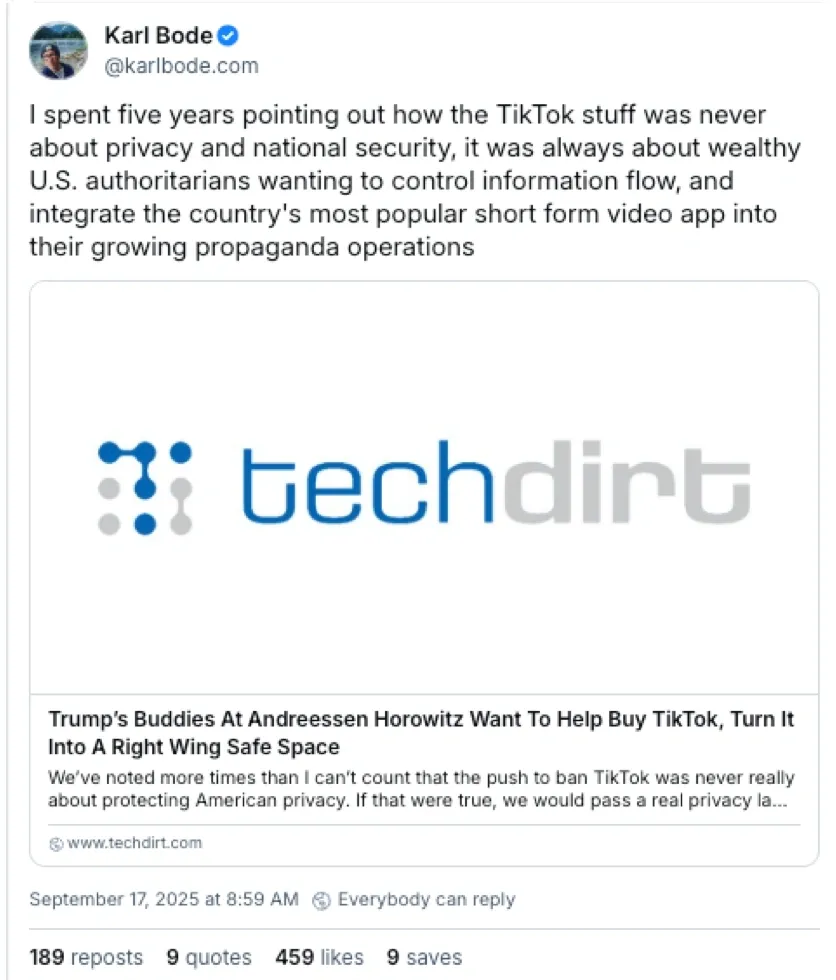
Earlier this week, it was reported that Trump is once again laying the groundwork for TikTok’s U.S. business to be transferred into the hands of an investor consortium that includes Oracle and Silver Lake. Washington’s ongoing effort to force the app’s Chinese parent company, ByteDance, to divest or sell its U.S. operations was sparked by sovereignty concerns, and raises new ones related to corporate control of information flows.
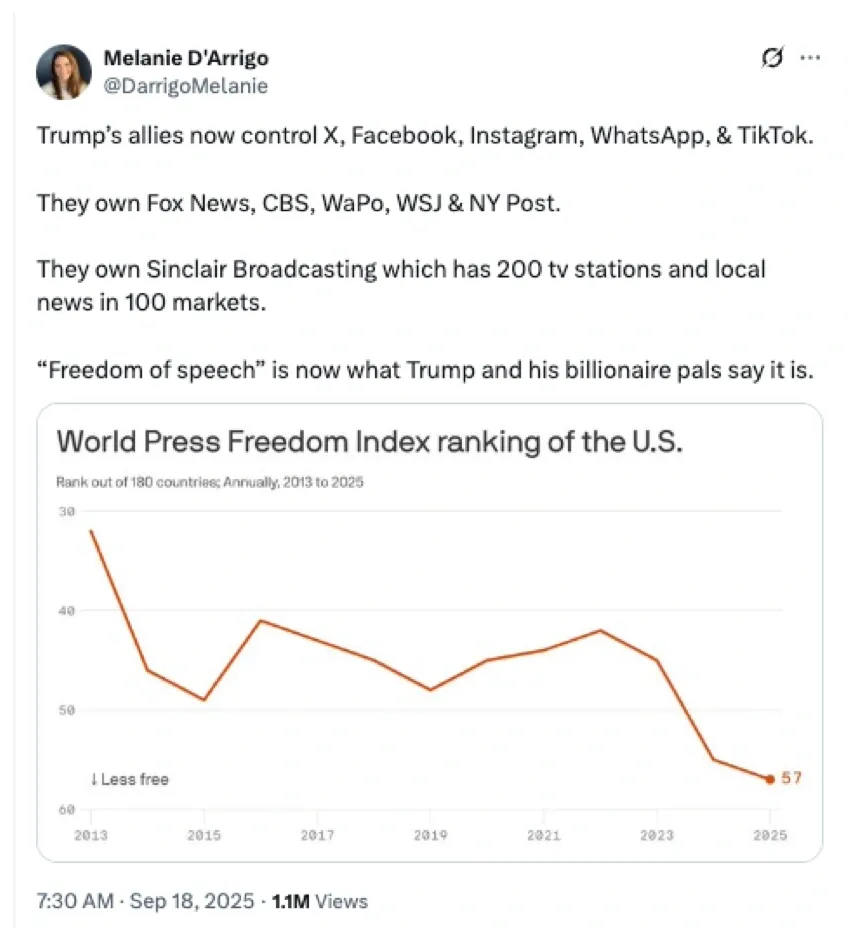
The U.S.’ battle with TikTok began in 2020 when President Trump issued an executive order banning transactions within the app, citing national security risks linked to Beijing’s alleged ability to pull data from U.S. users. He followed up with a divestiture order giving ByteDance 90 days to sell TikTok’s U.S. operations. The administration blessed a tentative deal where Oracle (and later Walmart) would take stakes in a new “TikTok Global,” but it never closed. Later, in June 2021, Joe Biden’s administration revoked Trump’s bans and replaced them with a broader, risk-based review framework for foreign-owned apps. And in April 2024, the U.S. (still under Biden) passed a major bipartisan national security law that forbids American companies from distributing, maintaining or updating apps controlled by foreign adversaries, defined as North Korea, China, Russia and Iran.
In contrast, Canada’s approach to TikTok — banning it from government devices in 2023 and later ordering a wind-up of its Canadian operations in 2024 — has been inadequate and even incoherent. Neither effort actually addresses the potential harms and national securty risks that the U.S. recognized in its original divestiture order: a foreign government’s ability to access sensitive data access from domestic users, and the potential Beijing could use the app to launder disinformation or censor the truth.
So why didn’t Canada align with the U.S., and require ByteDance to divest its ownership of TikTok’s Canadian operations?
The Canadian Shield Institute took a look at the legal regime and there does not seem to be anything stopping the Government of Canada from ordering ByteDance to divest from TikTok in Canada. It’s simply a path we chose not to take.
The government’s move to order the windup of TikTok’s Canadian operations followed a review under the Investment Canada Act, a law that aims to assess whether foreign investments are “injurious to national security.”
The legislation itself is a product of a sovereignty fight. In the early 1970s, the Committee for an Independent Canada campaigned against foreign control of Canadian businesses and pushed Ottawa to institute tighter screening of foreign takeovers. That climate helped give rise to the Foreign Investment Review Agency in 1973, created to judge whether foreign acquisitions were “beneficial to Canada.” A decade later, in 1985, the agency was replaced by the Investment Canada Act, which shifted the feds’ emphasis to welcoming investment while retaining review powers.
The federal cabinet has broad powers when assessing an investment. The law sets out that cabinet may “take any measures in respect of the investment that he or she considers advisable to protect national security,” including requiring a non-Canadian corporation or investor to divest control of a Canadian business or their investment in the entity.
The non-Canadian investor has the opportunity to challenge such an order by applying for a judicial review at the Federal Court. TikTok Canada did this last December in the wake of the feds’ wind-up order.
The government has the power to request closed Federal Court hearings on matters of national security and it’s been crickets on the case since last December. But we do know TikTok Canada is continuing its negotiations with the federal government under new Prime Minister Mark Carney.
A multi-jurisdiction privacy investigation into TikTok announced by Canadian privacy regulators is also proceeding slowly.
So where are we now? Even though TikTok Canada has been ordered to shut down, it does not seem likely that it will actually shut down until after it has exhausted its judicial review opportunities. Still, TikTok Canada has pulled back from sponsorships and support for local cultural events, including the Toronto International Film Festival and Juno Awards. It also spent big on an advertising campaign this summer that touted its value to homegrown artists and creators.
TikTok is a live test of digital sovereignty. A foreign-owned app captures Canadians’ location, biometrics, contacts and behaviour, while the real control sits wherever its data and algorithms are governed. And under China’s National Intelligence Law, companies must ‘support, assist and cooperate’ with state intelligence work, which can include providing data. Related counter-espionage and state-secrets rules further broaden authorities’ powers.
Ottawa can’t inspect or constrain what it doesn’t control, and right now no one in Canada can control TikTok. Canada’s move to ban the app on government devices, its privacy probes, and the Investment Canada Act shutdown order say the quiet part out loud: that sovereignty necessitates governance over algorithmic models and metadata.
We’re just dancing around more satisfying (or rather, meaningful) solutions that could address data sovereignty and the national interest.
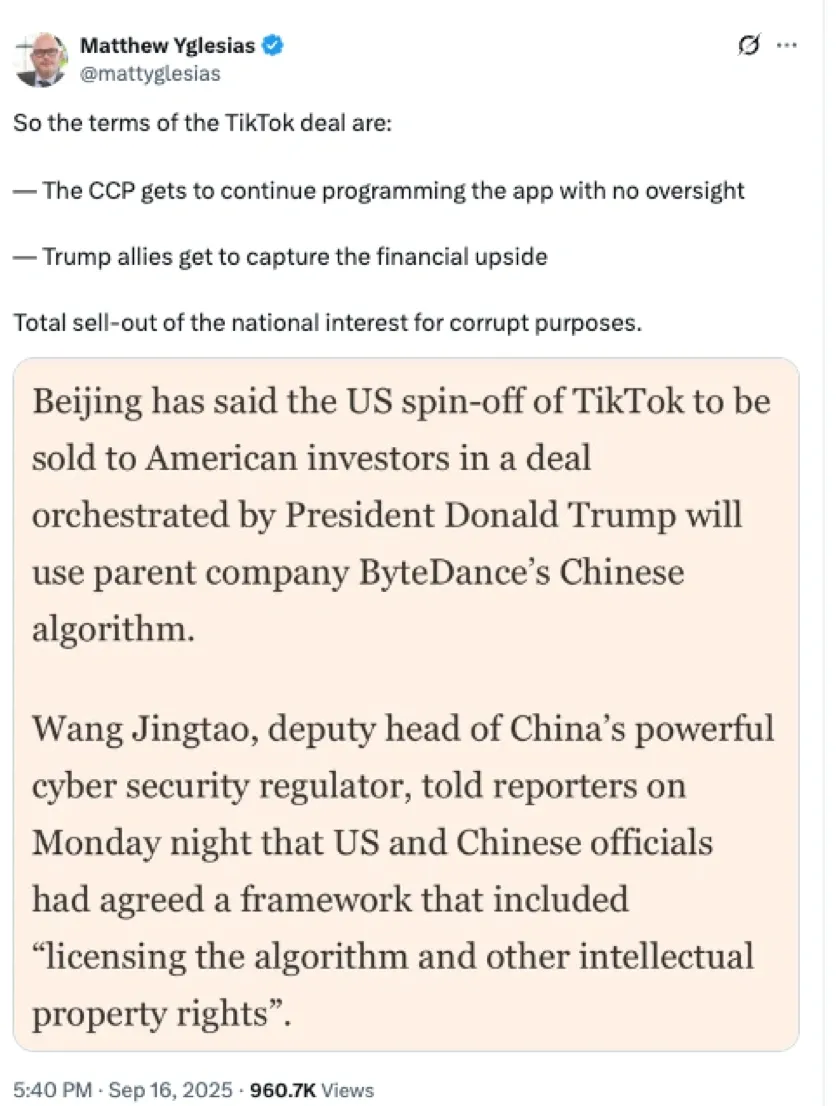
It’s worth noting that American tech firms’ ability to collect and store Canadians’ data also poses sovereignty risks – see SHIELD’s look into “smart glasses” from last week — but the type of state reach matters, and Canada’s leverage differs. If a state can legally commandeer an app’s data/algorithms in secret and Canada lacks meaningful oversight or remedies, divestment (or exit) should be on the table.
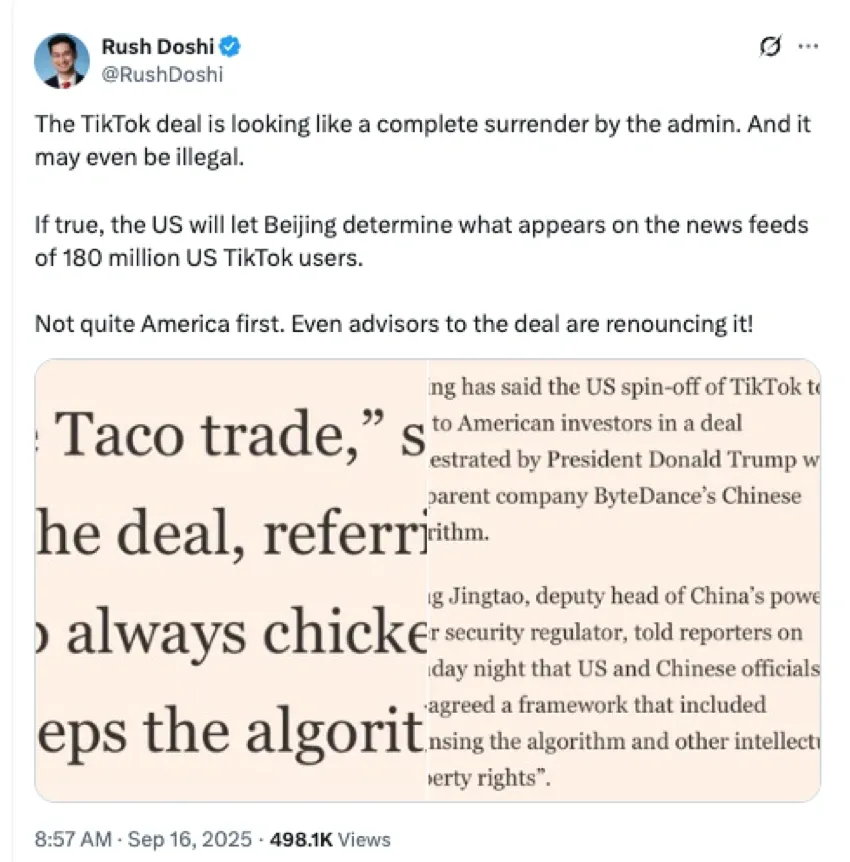
*Finally, we note that just because a structural separation of TikTokis occurring in the U.S., doesn’t mean the app can’t be weaponized. Ownership changes don’t neutralize its capacity for data-driven manipulation and narrative steering. And even with the potential of partial U.S. ownership, if TikTok U.S. licences ByteDance’s core algorithm or leaves room for upstream access, critics say Bejing’s influence risks will persist. Not the scepticism from foreign policy hawks and some members of Congress. Expect these algorithm details to be the red-flag issue in the deal’s final terms and potentially an element in the ongoing trade war.
Song of the Week
This week’s song was suggested by a reader (thank you!). Michael Feuerstack (fka Snailhouse) is among Canada’s finest (and to our reader’s mind, grossly underappreciated) songwriters. The Montreal-based Feuerstack asks the important question: ‘What isn’t what it is,’ urging reflection.


Subscribe to