Growth Rate of Permanent vs Temporary Jobs
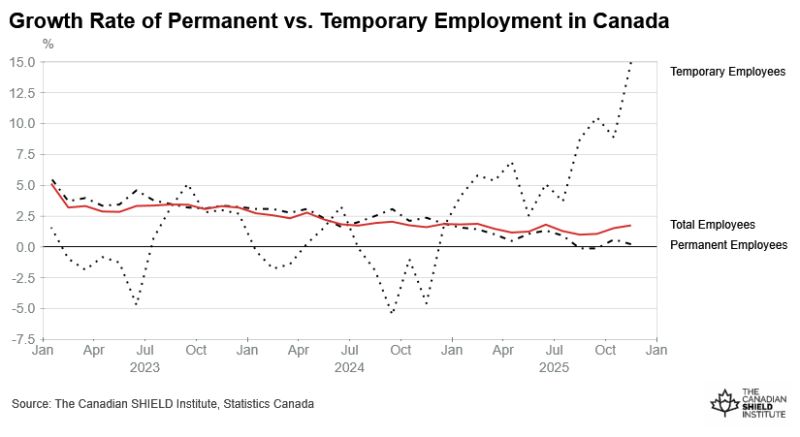
The trade war and accompanying uncertainty pushed job growth almost to a standstill for a large portion of 2025. The number of jobs in the economy, including self employed workers, fell through the summer months and grew by just over half a percent since Donald Trump was sworn-in as president.
CUSMA renegotiations and threats of new tariffs continue to cloud the economic outlook. Some key questions for the labour market in 2026 include:
- Will businesses become comfortable enough with the uncertainty to begin hiring again?
- Will that willingness translate into a lower unemployment rate or will new technologies, like Artificial Intelligence, replace humans in the marketplace?
- Will the jobs created be permanent, full-time jobs with pay, hours and benefits that sustain a middle-class life?
Total employment grew by 1.75% between November 2024 and November 2025, but temporary employment sky-rocketed while permanent employment increased by just 0.2%. Employers may be hiring, but those new jobs are precarious because they are not permanent. Prime Minister Carney’s plan to counteract the trade war by catalyzing private sector investment will not on its own be enough to stabilize the economy for workers across the country. Carney’s strategy must include a plan to ensure the benefits of that economic activity are spread broadly and deliver security for Canada’s people, otherwise the effort will be wasted energy.

Subscribe to